Why the Best Fleet Programmes Use Both
Replacing a damaged waste container can seem like the simplest solution.
But across a large container fleet, automatically replacing every asset that shows signs of wear can mean retiring perfectly serviceable equipment long before it has reached the end of its economic life.
One of the conversations we brought to RWM 2026 was therefore about looking beyond the individual container.
What happens when you assess the condition of the whole fleet first?
Some containers may only require preventative repairs. Others could benefit from comprehensive structural refurbishment. Some may genuinely have reached the point where replacement represents better long-term value.
Understanding the difference creates an opportunity to use refurbishment budgets more strategically and keep existing assets in service for longer.
That’s also why we don’t see mobile and factory container refurbishment as competing services.
They solve different problems.
Used together, they can form a planned approach to container fleet management built around a straightforward principle:
Audit. Prioritise. Refurbish. Replace when it makes sense.
Start With the Fleet, Not the Refurbishment Method
Start by asking:
“What condition is our fleet actually in?”
A container fleet can contain assets at very different stages of their working lives.
One container might have superficial damage that can be addressed quickly. Another may require replacement components or preventative repairs. A heavily used asset could need extensive structural work, while another may no longer be economically viable to refurbish.
Treating every container in exactly the same way can therefore create unnecessary cost.
A whole-fleet audit gives organisations an opportunity to understand condition first and prioritise intervention accordingly.
That might mean categorising assets into broad groups:
- Serviceable with no immediate intervention required
- Preventative repair or maintenance
- Suitable for mobile refurbishment
- Suitable for factory refurbishment
- Replacement required
The objective isn’t to refurbish everything.
It’s to understand where refurbishment provides value and where it doesn’t.
Explore IEG waste container refurbishment services
Mobile Refurbishment: Our Service, Your Site.
For large fleets, transporting containers away from site can introduce unnecessary logistics, downtime and disruption.
Mobile refurbishment reverses that model.
Instead of taking the fleet to the refurbishment facility, the refurbishment capability comes to the fleet.
IEG’s mobile teams establish a controlled working area at the customer’s site, allowing suitable containers to be worked on within their existing operational environment.
At RWM 2026, we demonstrated this mobile capability as part of our wider lifecycle approach.
Depending on the condition of the assets and work required, a two-person mobile crew can refurbish up to 20 containers at the customer’s site, making the service particularly relevant to organisations managing larger fleets.
When does mobile container refurbishment make sense?
Mobile refurbishment can be particularly effective when:
- A significant number of containers are located at one site
- Assets require preventative rather than extensive structural work
- Removing containers from service would create operational disruption
- Transporting individual assets would add unnecessary cost
- A fleet requires a planned programme of ongoing maintenance
Local Authorities, waste operators, universities, hospitals, large commercial estates and other organisations managing substantial container populations can therefore benefit from incorporating mobile intervention into their wider fleet strategy.
Preventative Repair Can Stop a Small Problem Becoming a Bigger One
Refurbishment doesn’t always need to mean completely rebuilding an asset.
There is considerable value in identifying deterioration early.
Wear around frequently used components, damaged coatings or developing structural issues may initially require relatively limited intervention.
Left untreated, however, those issues can become more significant.
This is where preventative container maintenance becomes part of lifecycle management.
Instead of waiting until an asset requires major refurbishment—or reaches the point where replacement becomes the only viable option—planned inspections and mobile repairs can help address problems earlier in the lifecycle.
For large fleets, the cumulative impact can be significant.
Keeping more containers within a serviceable condition can reduce reactive replacement requirements and make future capital expenditure easier to plan.
Factory Refurbishment: When the Asset Needs More
There will always be containers requiring more comprehensive intervention.
That’s where factory container refurbishment comes into its own.
Removing an asset from its operational environment provides greater scope for extensive structural repairs and a more comprehensive refurbishment process.
Factory refurbishment can be appropriate for containers requiring work beyond the practical scope of a mobile programme, particularly where structural condition needs greater attention.
The key point is that sending an asset to the factory isn’t evidence that the mobile service has failed.
It’s the next level of intervention.
A well-managed programme should be capable of identifying which containers can be addressed efficiently onsite and which warrant more extensive factory work.
Explore factory container refurbishment
Mobile vs Factory Refurbishment: It’s Not Either/Or
Comparing mobile and factory refurbishment as though one must be better than the other misses the wider opportunity.
They are complementary tools.
Mobile refurbishment provides an efficient way to address suitable assets where they are already located.
Factory refurbishment provides the environment and capability required when more extensive structural repairs are justified.
The strongest fleet programmes can use both.
For example, an audit of a large container fleet might identify:
Group A – Serviceable assets
No immediate work required. Continue monitoring condition.
Group B – Preventative intervention
Minor issues can be addressed onsite before deterioration progresses.
Group C – Mobile refurbishment
Assets suitable for planned refurbishment without removing them from the customer’s operation.
Group D – Factory refurbishment
Containers requiring more comprehensive structural intervention.
Group E – Replace
Assets that have genuinely reached the end of their economic working life.
Suddenly, the decision isn’t simply refurbish versus replace.
It’s about choosing the most appropriate intervention for each asset.
Logistics Matter When You’re Managing Hundreds of Containers
The economics of refurbishment also change considerably when fleet scale increases.
Moving individual containers inefficiently can quickly undermine the financial and environmental case for refurbishment.
That’s why logistics need to form part of the programme.
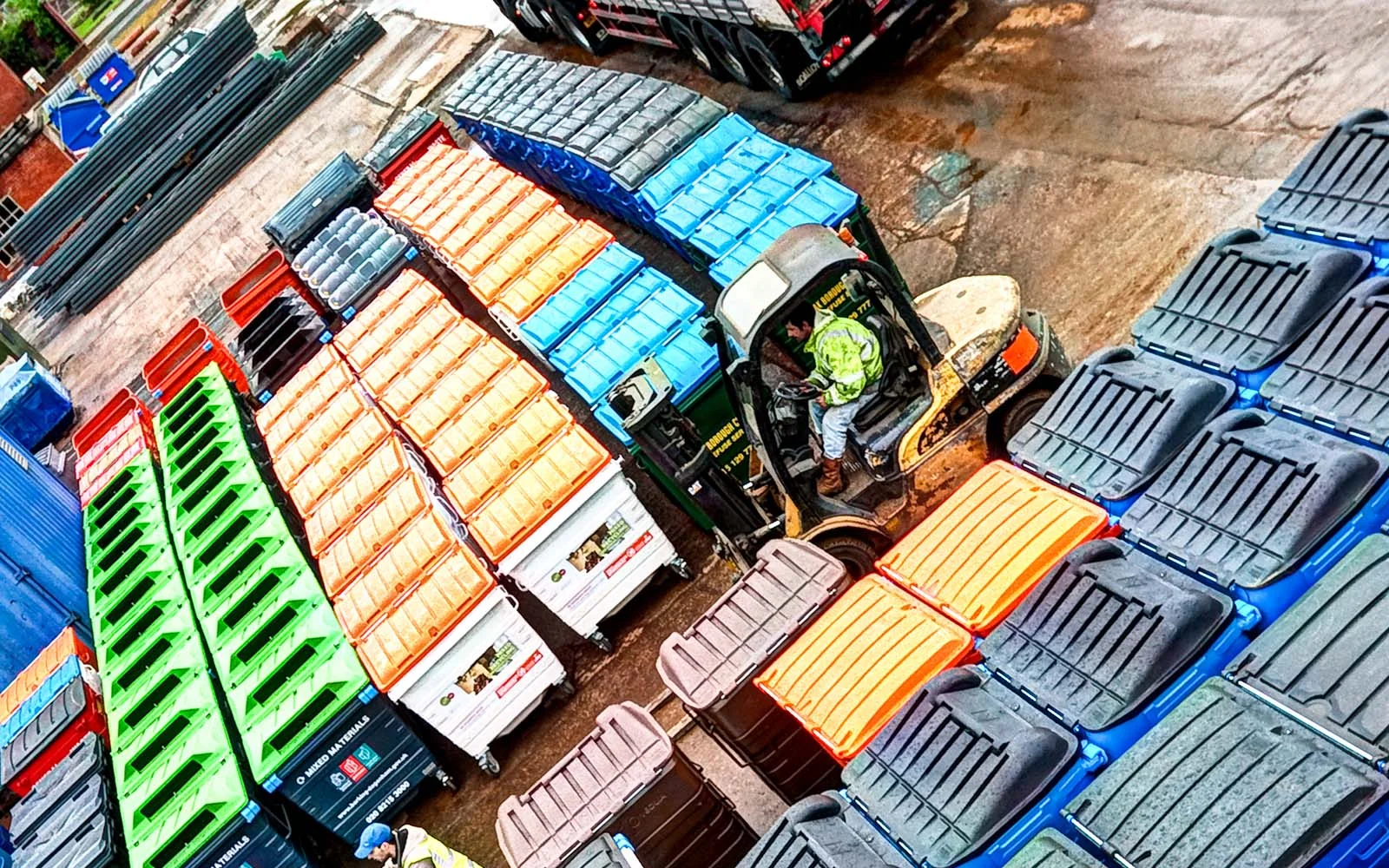
IEG’s factory refurbishment operation can collect up to 78 containers per trailer load, helping consolidate the movement of assets requiring factory intervention.
Meanwhile, suitable containers can remain onsite and be addressed by the mobile team.
This creates the opportunity to divide a fleet intelligently rather than transporting every container simply because refurbishment work is required.
For organisations managing hundreds or thousands of assets, that distinction matters.
Refurbishment Is Also an Opportunity to Review the Specification
Returning a container to good condition is one objective.
Returning it to service better suited to its current application can create additional value.
Waste streams change.
Collection arrangements change.
End-user requirements change.
Security requirements change.
A container originally purchased years ago may still be structurally sound while its original specification no longer reflects what the site needs today.
Refurbishment therefore creates a natural opportunity to consider upgrades such as:
- Replacement lids
- Different apertures or restrictor plates
- Locks and security components
- Castors and mobility components
- Updated branding
- Replacement hinge components
- Drainage and pest-prevention accessories
Through the wider IEG offering, refurbished containers can be supported with DuraFlex lids, locks and replacement components, allowing the asset’s next lifecycle to reflect today’s operational requirements rather than simply recreating its original specification.
Explore DuraFlex lids, and container locks and container accessories
Supporting Compliance Throughout the Container Lifecycle
Maintaining an asset isn’t solely about appearance or structural condition.
Where relevant equipment is subject to inspection requirements, those considerations need to form part of the refurbishment process too.
IEG’s factory capabilities include in-house LOLER testing, providing another element of support within the wider refurbishment programme.
For fleet managers, bringing condition assessment, refurbishment and appropriate testing into a coordinated programme can provide greater visibility over the assets being returned to operation.
Refurbishment Can Make Budgets Work Harder
Budget pressure often creates a temptation to frame procurement as a simple choice:
Buy new or keep the old fleet going.
There is a much wider middle ground.
A planned refurbishment programme can allow organisations to direct investment according to condition.
Rather than allocating replacement budget evenly across a fleet, capital can be prioritised towards the assets that genuinely need replacing while serviceable containers receive proportionate intervention.
That creates a more nuanced approach:
Maintain what is good.
Repair deterioration early.
Refurbish assets where there is worthwhile life remaining.
Replace assets when continued intervention no longer makes economic sense.
The result is not refurbishment for refurbishment’s sake.
It is better-informed asset management.
Keeping Containers in Use for Longer
One of the central themes of IEG’s presence at RWM 2026 was full lifecycle asset management.
Container refurbishment is a fundamental part of that approach.
A container doesn’t have to move directly from “in service” to “replacement”.
There can be multiple opportunities throughout its life to inspect, maintain, repair, refurbish and adapt it.
For organisations managing substantial fleets, moving from reactive replacement towards a planned lifecycle programme can create greater visibility over future requirements while helping maximise the value already invested in existing infrastructure.
The RWM Takeaway: Audit. Prioritise. Refurbish. Replace When It Makes Sense.
Our refurbishment demonstration at RWM wasn’t intended to make the case that every old container should be refurbished.
Quite the opposite.
The conversation was about making better decisions about every asset in the fleet.
Understand what you have.
Identify the containers that need attention.
Choose the appropriate level of intervention.
And replace assets when replacement genuinely represents the right decision.
By combining whole-fleet audits, mobile refurbishment and comprehensive factory refurbishment, IEG can help organisations develop a programme around the condition and priorities of their own fleet rather than forcing every container through the same process.
Audit. Prioritise. Refurbish. Replace when it makes sense.
Review Your Container Fleet
If you’re reviewing replacement budgets, managing an ageing fleet or simply don’t have a clear picture of the condition of your container assets, an audit is a useful place to start.
Explore IEG’s mobile and factory container refurbishment services or speak to our team about reviewing your fleet.