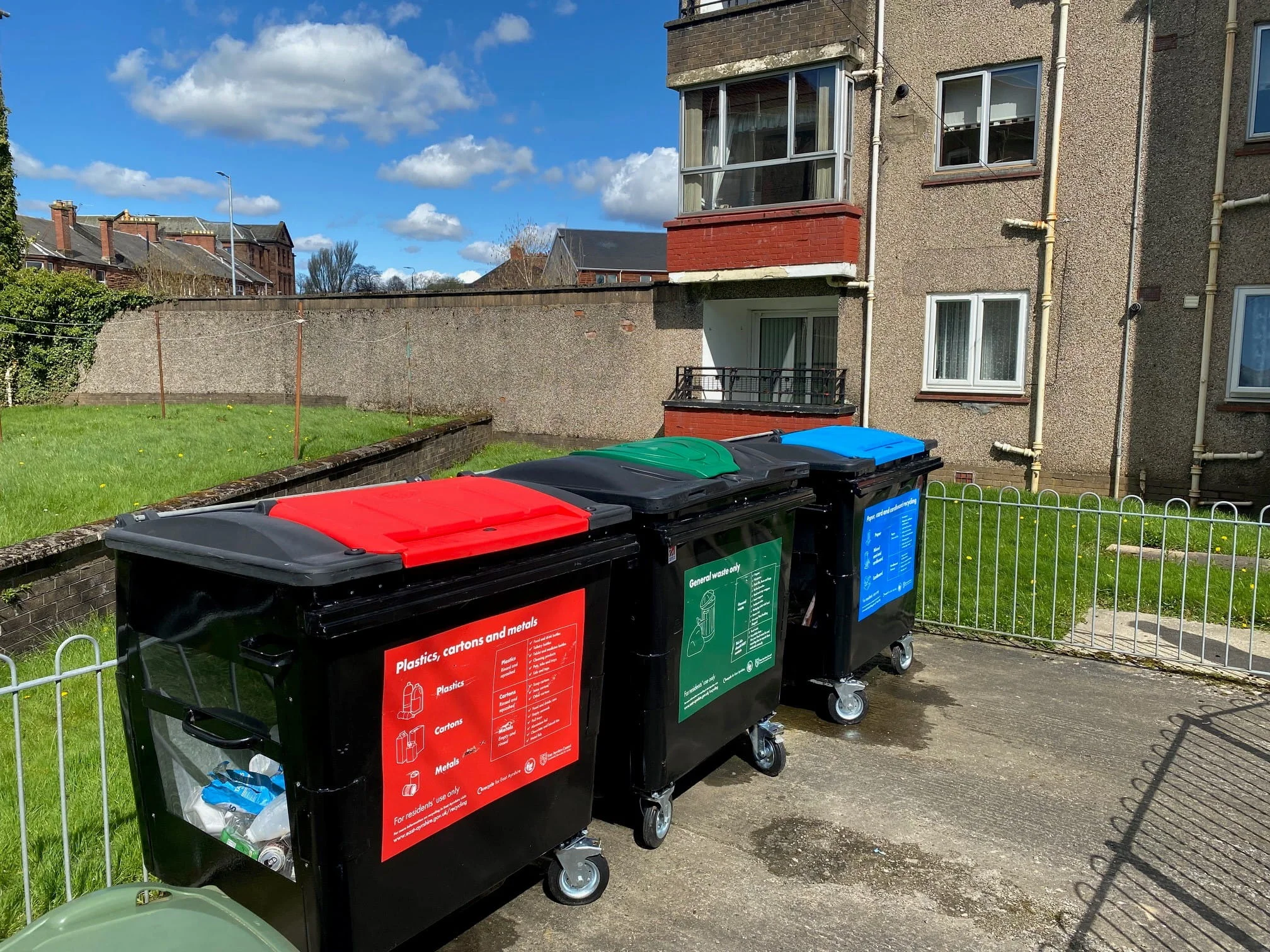
A waste container might appear to be a relatively simple piece of infrastructure. But one of the conversations reinforced at RWM 2026 was just how much influence the container specification can have on what happens to a waste stream once that container enters service.
Capacity. Lids. Apertures. Locks. Accessibility. Branding. Mobility. Drainage.
Individually, these can look like relatively small specification decisions. Together, they determine whether a container simply holds waste or actively supports a more efficient waste and recycling operation.
At RWM 2026, we used our Continental steel containers and DuraFlex lid and accessory range to demonstrate how operators can start with the waste stream and the end user, then build a container specification around both.
For organisations reviewing their waste infrastructure, there are several questions worth asking before deciding what the next container in the fleet should look like.
Start With the Waste Stream Not the Container
Choosing the right waste container shouldn’t begin with:
“Do we need a 660L or an 1100L?”
It should begin with understanding what the container needs to achieve.
What material is being collected? How much is generated between collections? Who will use the container? How will it be emptied? Is contamination currently a problem? Does access need to be controlled?
Answering those questions first makes decisions around capacity, lid design and accessories considerably easier.
IEG’s Continental range provides multiple capacities and configuration options, allowing the container to be specified around its application rather than expecting the operation to adapt around a standard bin.
Explore Continental waste containers
1. Capacity: How Much Waste Are You Actually Producing?
Larger isn’t automatically better.
Container capacity should reflect the amount of material generated between collections, alongside the available footprint and the way the container will be handled.
Too little capacity can lead to overflowing containers and additional collections. Too much can mean paying for unnecessary infrastructure, occupying valuable space or retaining certain waste streams for longer than is desirable.
Understanding the relationship between waste volume, container capacity and collection frequency is therefore an important starting point.
The Continental range includes different capacities for exactly this reason: the appropriate solution for a small commercial site may look very different from the specification required across a large Local Authority fleet or high-volume operational site.
2. Lids and Apertures: Design Around the Material You Want to Collect
Once capacity has been established, the next question is how people will put material into the container.
A fully opening lid might be appropriate for one application, while another waste stream could benefit from a deliberately restricted aperture.
Paper, bottles, cans and other recyclables can each be supported by different opening configurations. DuraFlex recycling lids, for example, are available with aperture options designed around different materials.
The principle is straightforward:
Make the correct action obvious and easy.
A well-chosen aperture can help communicate what belongs inside before a user even reads the signage.
That makes lid specification an important part of contamination control rather than simply a choice of how the container opens.
Explore DuraFlex trade waste and recycling lids
3. Locks and Security: What Are You Trying to Keep Out?
Container security was another important part of our RWM specification conversations.
Locking a waste container isn’t only about protecting the physical asset.
Depending on the environment, controlled access can help address:
- Unauthorised disposal
- Contamination
- Fly-tipping
- Access to valuable recyclable materials
- Public access to waste
- Misuse of containers
But simply making a container harder to open isn’t necessarily good specification.
A locking system also needs to consider who legitimately needs access and how they interact with the container.
Facilities teams, residents, collection crews and members of the public may all have different requirements. Security therefore needs to be balanced against usability and accessibility.
This is why locks should be considered as part of the complete container specification rather than added as an afterthought.
DuraFlex provides locks, keys and associated replacement components that allow security requirements to be incorporated into both new and existing container fleets.
Explore DuraFlex locks, accessories and spare parts
4. Accessibility: Who Actually Uses the Container?
The person purchasing a container is rarely the person using it every day.
That’s an important distinction.
Depending on its location, a container may need to be used by employees, residents, students, facilities teams, members of the public or collection crews.
Their needs should influence the specification.
Consider:
How high is the opening?
How much force is required to operate the lid?
Can the intended user reach the aperture comfortably?
Does a security feature create an unnecessary barrier to legitimate use?
Could a lid-in-lid arrangement provide easier everyday access while retaining the main lid for emptying or larger items?
DuraFlex lid-in-lid configurations provide one example of how a relatively small design decision can alter the way users interact with an existing four-wheeled container.
Explore DuraFlex lid solutions
5. Branding: Tell People What Goes Where
Physical infrastructure and communication should work together.
Clear container branding can reinforce the intended waste stream and help users make the right decision at the point of disposal.
That can be particularly valuable across:
- Universities and schools
- Retail estates
- Residential developments
- Healthcare sites
- Local Authority collections
- Multi-site commercial operations
Consistency matters too.
If colours, apertures and messages change continually across an estate, users have to reinterpret the system each time they dispose of something.
Where possible, the physical container specification and visual communication should therefore form part of the same waste-stream strategy.
At RWM, our Continental display highlighted external branding as one of the specification options capable of directing end-user engagement.
6. Towing and Mobility: Think About What Happens After the Bin Is Full
A container doesn’t spend its entire working life stationary.
For some operations, how it moves around a site is just as important as how waste enters it.
Large campuses, manufacturing environments and commercial sites may need containers to travel considerable distances between the point of use and the collection point.
That means considering mobility during specification.
Depending on the application, options can include towing configurations and different lifting arrangements. Our RWM Continental display highlighted specialist configurations including towing, DIN lifting points and internal or external fork arrangements.
Specifying these requirements from the outset can make the container better suited to the operation throughout its working life.
7. Drainage, Pest Prevention and Maintenance: Think Beyond Day One
Some of the most valuable specification decisions only become apparent months or years after a container has entered service.
Drainage is a good example.
A container needs to be cleaned and maintained throughout its life, but openings can also create potential access points for pests.
Our Continental specification displayed at RWM included a rodent-repellent drain plug as standard, alongside a strengthening pattern within the base designed to assist drainage.
The same long-term thinking should extend to replaceable components.
Lids, hinge bars, locks, castors and other frequently used parts will inevitably experience wear. Choosing infrastructure for which replacement components are readily available can help operators repair rather than prematurely replace an otherwise serviceable container.
Explore DuraFlex container spares and accessories
A Better Specification Can Also Extend the Life of Existing Containers
Smarter specification isn’t limited to purchasing new bins.
One of the advantages of treating the container as a collection of serviceable components is the ability to change its specification during its working life.
A damaged lid can be replaced.
A new aperture can support a change in waste stream.
Locks can improve security.
Castors and hinge components can be replaced as they wear.
Branding can be updated when collection arrangements change.
That creates an important connection between specification and asset lifecycle management.
Instead of asking whether an existing container still matches today’s requirements, operators can also ask:
Can we adapt it?
DuraFlex’s range includes lids, locks, hinge components, castors and other replacement parts designed to keep container fleets in service for longer.
The RWM Takeaway: Small Details Can Have a Significant Impact
Our Continental display at RWM highlighted strengthening features, drainage, specialist lifting and towing arrangements, branding and DuraFlex lid and lock configurations. The purpose wasn’t simply to demonstrate how many options can be added to a bin.
It was to demonstrate why those options matter.
The carousel accompanying this article summarises the same principle: relatively small details within a container specification can have a significant effect on contamination, durability, security, safety and end-user engagement.
That’s ultimately what smarter container specification should achieve.
Not more features for the sake of having them.
The right features for the waste stream, environment and people using the container.
Is It Time to Review Your Container Specification?
Whether you’re procuring a new fleet, reviewing existing infrastructure or trying to address contamination, accessibility or security challenges, start with the operation rather than the product.
IEG can support customers with new Continental containers alongside DuraFlex lids, locks, spares and accessories, helping build specifications around the requirements of individual waste streams and sites.
Explore our container range, configure your requirements online or speak to the IEG team about your next waste container project.